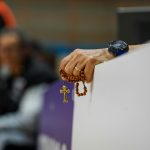
Photo by Daniel Tseng on Unsplash
Political Emphasis at 2024 Katholikentag in Würzburg
The Katholikentag held in Würzburg in 2024 marked a notably political turn, with a strong focus on democracy and civic engagement. High-profile figures including Federal President Frank-Walter Steinmeier, Chancellor Friedrich Merz, and Bavarian Minister-President Markus Söder delivered appeals for protecting democratic values and encouraging involvement, especially among young people. The event underscored the Catholic Church’s effort to position itself as an ally of democracy, making this edition one of the most politically charged in recent memory [Source 1].
The church took advantage of the platform to advocate active participation in democratic processes, with Steinmeier urging visitors to help uphold a democracy seen as increasingly fragile. Merz emphasized the importance of middle-ground political engagement for the younger generation. These calls aimed to mobilize the faithful and society at large toward democratic commitment [Source 1].
Katholikentag Focus on Democracy and Church’s Own Challenges
While the church positioned itself as a defender of democracy during the Katholikentag, the event also exposed internal challenges, including broader debates on reforms such as the role of women, the celibacy mandate, and synodal decision-making. Discussions reflected ongoing tensions between the church’s aspirations to influence social and political discourse and its need to address longstanding institutional issues.
Besides politics, religious and social themes resonated across the events. The church’s call for peace, social justice, and humane refugee policies were highlighted alongside critical reflections on its own governance, notably through the German Synodal Path, where bishops and laity jointly deliberate the church’s future direction. The Katholikentag maintained its function as a space for open, sometimes contentious dialogue, facilitated by initiatives like the “Democracy Church” [Source 1, Source 5, Source 8].
Implications for Expats and International Residents in Germany
For expatriates, foreign workers, and international students living in Germany, the 2024 Katholikentag’s emphases underline the importance of active participation in democratic processes, especially as Germany navigates challenges to its democratic fabric. Those engaged with or interested in Germany’s social and political life may find opportunities for civic involvement through local community and church initiatives.
The event also signals ongoing debates within influential institutions like the Catholic Church about inclusion and reform, topics relevant to diverse multicultural and international communities in Germany. While direct legal or financial obligations for expats are unaffected, awareness of these societal conversations can aid integration and understanding of Germany’s civic landscape. Observers interested in religious or cultural events may follow future Katholikentage or related church-sponsored forums to engage with these themes [Source 1, Source 5].
For more information, readers can consult the original coverage at Tagesschau: https://www.tagesschau.de/inland/gesellschaft/katholikentag-politiker-sorge-um-demokratie-abschluss-100.html.